







How do We Want to Live?

The Futurium in Berlin (Germany) explores the ways science, technology and society can shape future living.
How Do We Want to Live?
Conversations with Stefan Brandt, Director of Futurium in Berlin, Germany
by Sandro Debono
Season Two of the ‘Museums in a Climate of Change’ has taken us far and wide as we continue to explore the latest thinking around climate and change. Dr. Sandro Debono, a museum thinker based on the Mediterranean island of Malta, shares his thoughts and reflections about this series of podcasts, now in its second season, featuring conversations with museum professionals from all over the world, co-hosted with Cody Liska.
Our conversations are well prepared in advance. As we work on our research and list the questions we are keen on, it often feels as if everything is set and ready to go. It is never the case. This time, we will be engaging with responses to a guiding question, one chosen to inform outreach and content, experiences and initiatives by a relatively new museum:
Futurium was inaugurated in Berlin, Germany in September of 2019, a mere five months before the start of the Covid-19 pandemic. Hence my title - ‘How do we want to live?’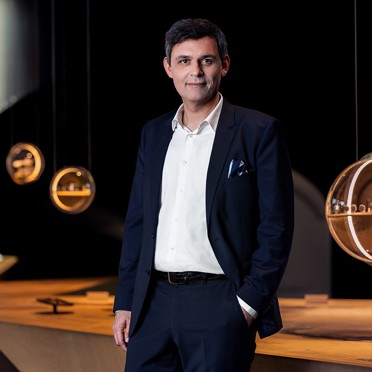
Stefan Brandt, Director of FuturiumThis question was the leitmotif of our conversation with Stefan Brandt, director of Futurium. I do not choose the term "leitmotif" lightly. Stefan’s background includes a doctorate in musicology, and his experience prior to taking the helm of Futurium in 2017 is broad and extensive. A leitmotif (from German Leitmotiv, “guiding motif”) is a short, recurring musical idea associated with a particular character, object, place, emotion or idea.
This question would set the rhythm and harmony to our conversation but not just. Stefan leads an institution that is part of the emerging category of futures-oriented museums, shaping public discourse on futures over the past ten decades.
We already had the pleasure of speaking with some of the thought leaders in this category, including Lath Carlson, then leading the Museum of the Future in Dubai, and Kristin Alford, then leading the Museum of Discovery in Adelaide, Australia. Stefan’s leading role at the Futurium brings together his expertise and experience to advance a purpose, as is the case with other thought leaders we have been in conversation with. The emphasis on purpose was very clear in this respect. For Stefan, it is “ … always important to have impact, to make a change or to make something better, be it in society, be it in cultural institutions”.
Futurium did come across as a means to an end rather than an end in itself.
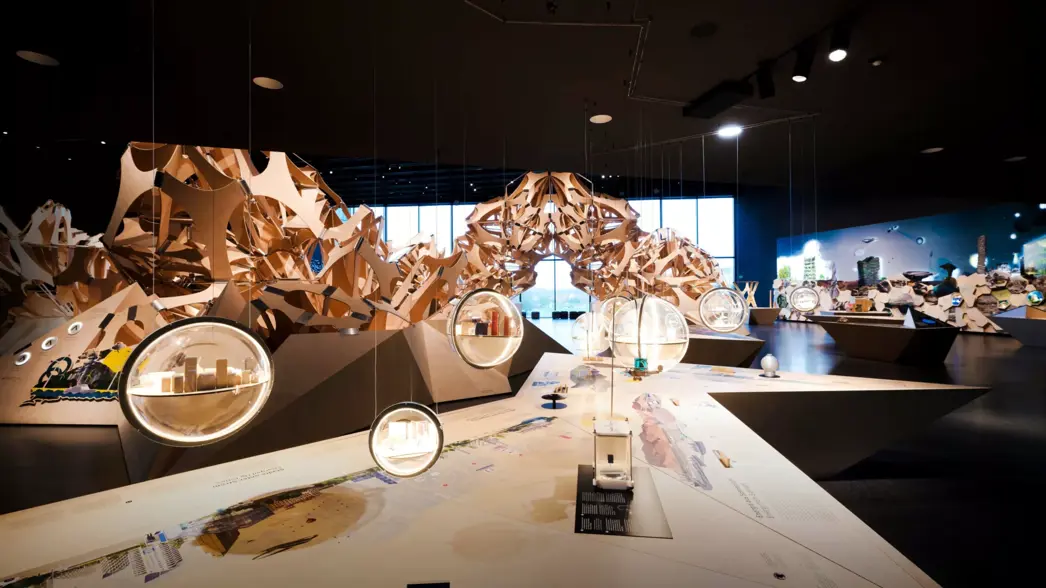
During our podcast, Stefan would take Cody and me on an e-podcast tour, introducing us to projects and experiences framed by three overarching narratives situated in what Stefan describes as thinking spaces. Futurium’s narrative triangulates and cross-references technology with nature and society. This institution has no collections to manage, and museum content is created in response to needs and requirements. Artists and artistic practice also take centre stage as intermediaries, facilitating access to content in ways that make it far more accessible. This makes Futurium an agile institution but to do so requires continuous reinvention, guided by a clear strategy.
Futurium is not there to tell people what to do, but to provide information in a way that instils curiosity, to meet them where they stand, and to empower them to explore, connect, and relate, fully aware that each visitor may wish to pursue a different path. On first impression, this choice may appear noncommittal and overly neutral. Stefan frames it comfortably and qualifies it as a response to the public’s search for freedom. “We try to be as non-ideological as possible, as open as possible to connect with as many people as possible.” Stefan quips.
The Database of Hopes project, which invites visitors to share their aspirations for the future, is one way Futurium puts this thinking into practice. Surprisingly, though, most of the content submitted goes beyond personal ambitions or desires. Instead, it overwhelmingly references community-driven aspirations, and this aligns perfectly with Futurium’s ambitions, too. “We are standing for an open society, for a democracy. We are standing for a sustainable society.” Futurium’s experience aspires to do so indeed. Clear Compromises, an interactive democratic deliberation game, invites participants to take on different roles and collaboratively negotiate solutions to real-world challenges. In this case, Futurium is perfectly comfortable with arguing, but for a purpose.
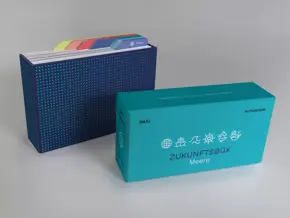
Zukunfts Boxes, "Future Boxes" from Futurium
Futurium is also active beyond its institutional space. Stefan introduced us to the Futures Boxes project, an educational initiative promoting futures literacy by empowering learners to explore possible futures through hands-on tools and scenarios. It stands for Futurism’s ambition to reach out even further than it has done so far, particularly to schools, but also with a purpose - that of bringing them back to Futurium in one way or another.
At this point, Cody and I could not help but ask whether Futurium is more focused on the German public than on its international positioning. Stefan’s reply is straight and to the point. Futurium’s primary mission is to serve a German audience, but there is also an unquestionably European perspective embedded in that focus. Futurium’s projects are international in content and partnerships. “Our voice is metaphorically speaking German but global at the same time”, Stefan claims.
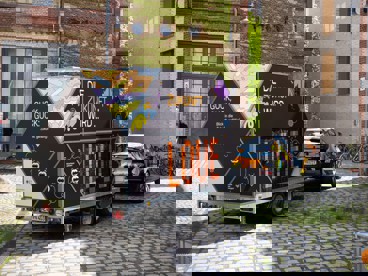
The mobile Futurium trailer
Stefan introduced us to an institution that is not shaped by activism. Neither is it a neutral observer. At best, we might describe it as a civic space for critical imagination, where citizens are encouraged to take responsible action. Lath Carslon, the former CEO of the Museum of the Future, would classify this type of institution as Museum 4.0, an evolved museum model that is more responsive to contemporary society's needs. Stefan comfortably quotes Lath to make his point too.
Working at Futurium has made Stefan increasingly aware that the future is within us. But to achieve that, we need to empathize and embrace a more human approach to people's true feelings and situations. Indeed, in a moment when the future often feels imposed rather than shaped, museums have an opportunity, and a responsibility, to slow the conversation down, to widen it, and to root it in diverse ways of knowing.
This is how Futurium invites its publics to engage with an all-encompassing question:
“How do we want to live?”
Listen to the podcast in its entirety here.
As you listen to this podcast, you will hear Stefan mention ideas, projects and many other details. Should you wish to explore further, these are some links to the things that get mentioned:
Futurium
Hamburger Kunsthalle Art Museum
Database of Hopes Project
Lath Carlson - The Mindset to lead a Museum of the Future
The Crazy Compromises Experience
The Future Box Project